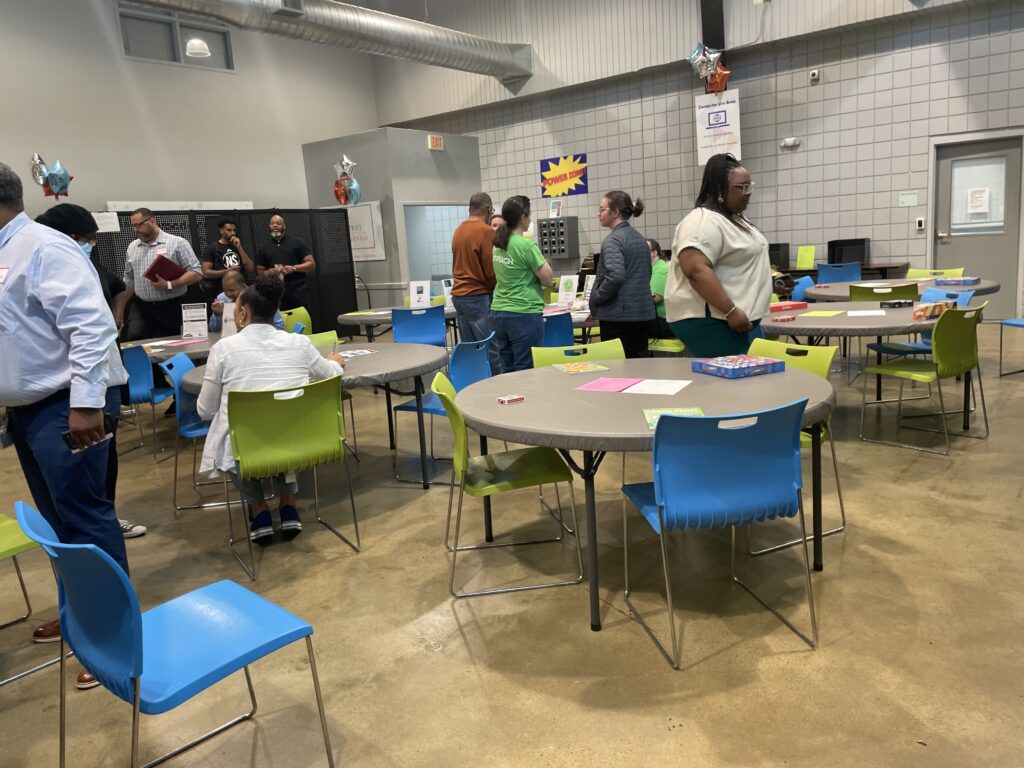
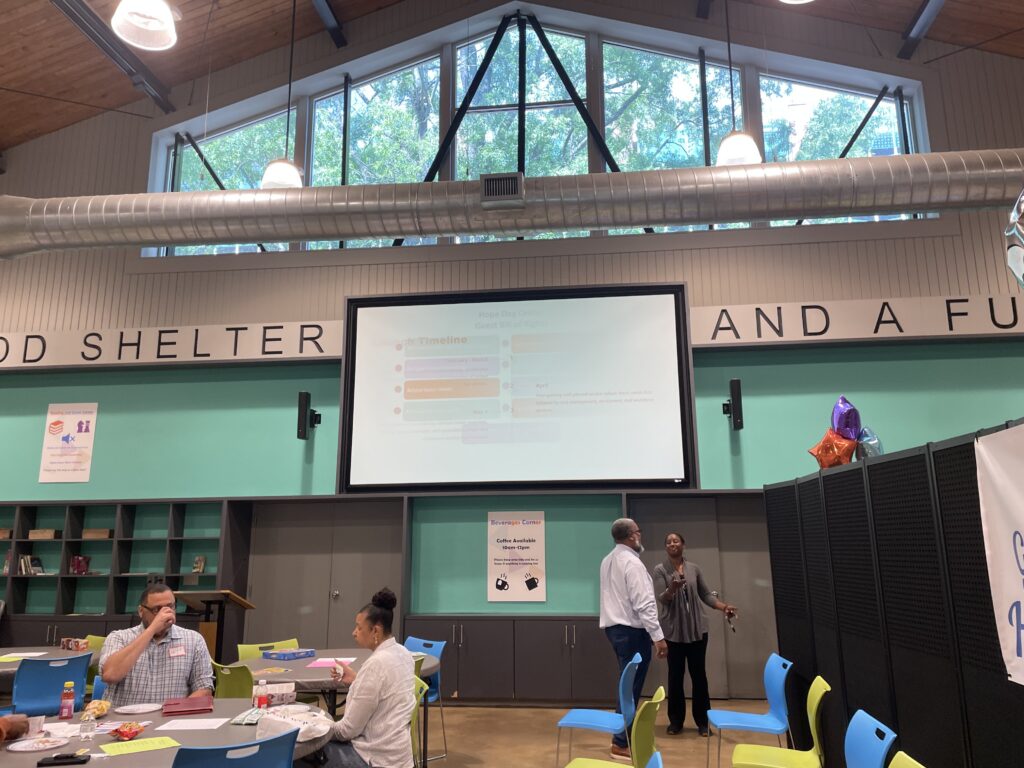
AWD got to visit the Urban Ministries of Durham’s (UMD) newest project, the Hope Day Center. It is a place to cool off, but it also offers a plethora of connections and services to help people find employment, housing, financial services, and more.
AWD spoke with Dewayne Brown, Program Coordinator for the Hope Day Center.
Mr. Brown, what’s happening here?
I always tell people when they ask me that question, we want to present ourselves as a one stop shop. We have neighbors in the community that are tired of going to five or six different places. And when we can offer them one place to get the majority of the resources that they need, that’s what we’re gonna do. When they come in, we’ll ask them what resources they’re looking for and if we don’t have it, by the next time they come back, we’re going to see if we can have it in here for us.
AWD works with the aging population, with older adults, and that means for us 50+; How does the Center work for someone in that age range?
I was talking to someone just today from this agency called Employment Source.They work with individuals who are aging to guide them through benefits counseling. There are some people who are aging, they’re receiving a monthly income, but they also want to go out and get a little part-time job. Their concern is, “How much money can I make so it doesn’t affect my benefit?”
We’re going to have them on site at some point. Unfortunately, for a lot of us, 65 comes and you can’t retire, so you’re looking for that extra income. I live an hour, a little over an hour away and I end up putting $68 of gas in my car or twice a week. (Everyone shakes their heads.)
The Hope Center is going to be a learning thing. Through the process, we may decide on some things that we don’t need as much as others, and there’s some things that we may need a lot that we don’t have, and we’ll work to bring those in also.
We want to make it as easy for our neighbors as possible – removing barriers. There are so many barriers out here. For instance, you have somebody that wants to be housed. But their barriers are: I don’t have an ID. Don’t have a social security card. Don’t have a birth certificate. We’re going to be able to connect them to the resources that will help them get these things so that they can move along with the housing process. I’m so excited about it.
I’m really admiring the colors and all the wonderful things you have going on here! Please introduce yourself.
I’m India Howard, Operations Coordinator at UMD.
Thank you!
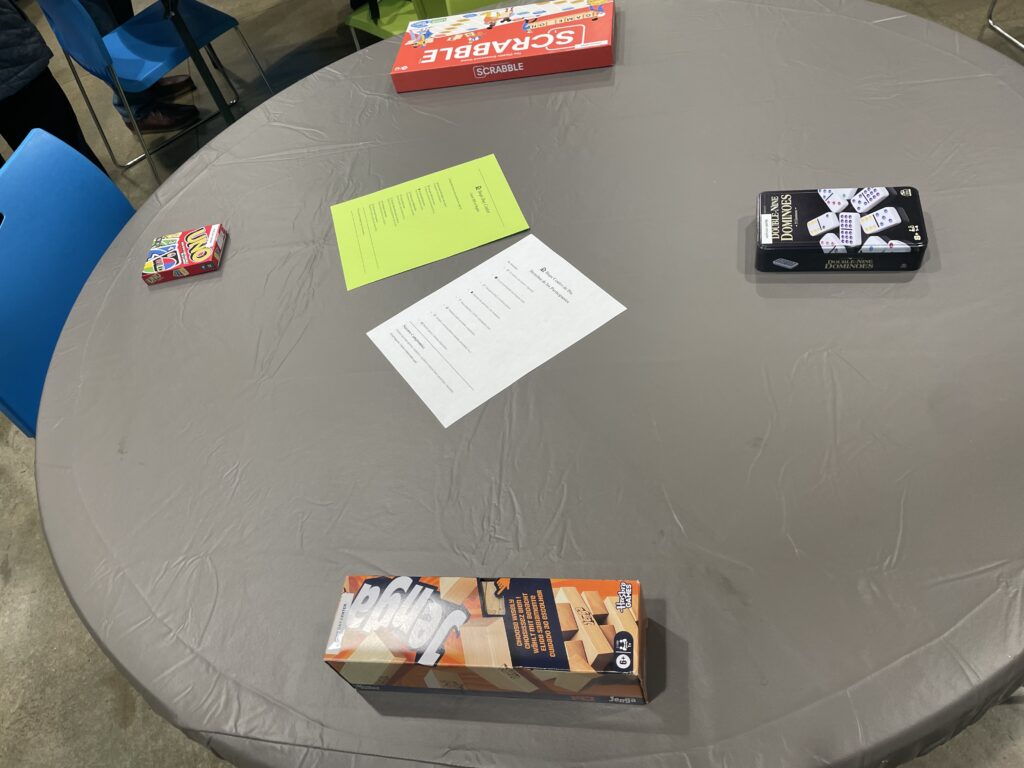
All of the neighbors who come in may not want to participate in a specific service, so they’re able to just come in and if they want to put their head down or just cool off, they’re able. We do have a few tables for some games if they wanted to participate in those, keep a little busy.
We also will have different vendors coming in throughout the week to help assist them with things. Some of those may be with medical needs, financial needs. We have Latino Credit Union that will be partnering with us. We have SOAR (SSI/SSDI Outreach, Access, and Recovery), we have veteran services. It’s a variety of different services that they’ll be able to participate in if they choose to. We just want to make them feel welcome.
We have a computer station. They will be able to access the internet if they want to job surf or just surf. They’ll be able to participate in a few things. We have a charging station. If they just want to come in and charge their phone, get powered up a little more, we have a little privacy area over here. Depending on what service they partake in, it may be some confidential information that needs to be shared. There’s a little station over there where they’ll be able to go and share information to get connected to whatever service they do choose to be connected with.
We want everybody to feel welcome. We want everybody to feel welcome and feel like they’re being supported. And we want them to feel safe.