Bull City Strong grew out from an Office of Minority Health grant to enhance Durham’s response to COVID-19 by improving health literacy. The program is five weeks long, with a cohort of 15 participants. The Community Health Promoters (which is what participants are called) learn about health literacy, with the curriculum crafted to meet their particular experiences. Many of Bull City Strong’s Community Health Promoters are older adults. Aging Well Durham spoke with Edeia Lynch, Community Health Promoter Coordinator with the Durham County Department of Public Health. Edeia leads Bull City Strong. In this interview, she shares about the program’s history, outcomes and what she has learned.
How did Bull City Strong get started?

There was a grant focussed on having an equitable response for marginalized communities around Covid 19. In the beginning, Bull City Strong specifically worked with the Black and Latino community members in Durham. In Durham County most of the populations who had barriers to accessing information and care for COVID-19 were Black and Latino communities, including individuals who speak only Spanish.
Shelisa Howard-Martinez, who was hired as a consultant, and I brainstormed for nearly a month until we came up with a training program. Our idea was to develop cohorts of Community Health Promoters. We believed that if we could train community members up about health literacy and COVID-19, they can essentially share that health information with the greater community. We saw it as a way of decreasing health disparities that we saw during the pandemic. Working with people who are well connected, providing resources to them to improve their health literacy in turn increases health literacy for our community. That’s what the thought process was. I thought it’d be a one-off thing, maybe a training. We are now on cohort 15. We’ve trained 300 people who have in turn reached 6,000 community members, 5 weeks at a time.
Could you please define health literacy?
It’s an increase of knowledge around health information. In our new vision statement for the Community Health Promoters (or CHPs) we specifically talk about connecting people to “accurate, accessible, actionable health information.” We have our little acronym, the Three A’s. We want to make sure our program is always set up with that goal in mind. Is it accurate? Is it accessible? Is it actionable? If it’s not, then you don’t need to be putting that information in the community. We want to make sure that we’re sharing information out that makes sense for our community.
We’re very intentional. We’re open to all, but at the same time we’re very intentional about reaching marginalized communities and making sure that we are prioritizing the cultural competence of every program.
Tell us more about the older adults within your cohorts.
A lot of our Community Health Promoters in the beginning were older adults, with the oldest being 77. We made sure that from the time that they fill out the interest form, to the end of the cohort, that Bull City Strong is accessible for them. If they need help filling out the forms, we’re there. There’s always an option for us to help them fill out the interest form on the flyer. If you read the QR Code and it doesn’t work, call this number or email us, we’ll help you file the form.
I think that COVID-19 not just highlighted our need for digital literacy, but pushed a lot of people into using technology even if they weren’t quite ready, or trained, or had the schooling to do so. Our digital age changed so much in the past forty years, we went from not having cell phones to having cell phones.
(My dad even prefers going in person to handle questions about certain things. ‘What if they tell me I need to go online?’ This is a person who is going to be 60 this month, but who still has that fear of going to the hospital and the hospital telling him to navigate something that’s on the web.)
So how do we make sure that we’re taking account the different levels of tech skills? How do we make space to support Community Health Promoters who have a range of ages? It was really helpful to have Shelisa there in the beginning, as someone who has experience with adult literacy and who has a lot of experience working with different, diverse communities.
How did adults with different abilities participate within the cohorts?
We were fortunate with that first cohort because not only were there a lot of older adults, but there were also a lot of people who are visually impaired. I quickly learned what accessibility looks like. We changed a lot of the program to be more accessible for the Community Health Promoters who have visual and/or hearing impairments. We’re proud of the work we did to make the program accessible. We’re so happy that different people from different walks of life and different abilities were able to help us navigate across the differences. They were patient with us and worked with us to get it right.
Until I became a facilitator, I didn’t understand that visual impairment is a spectrum. It’s not finite. Not everyone who is blind is completely blind. There are levels to it. You can do things to improve accessiblity for people who have visual impairments. Fo example, using a black background with light or white writing makes written materials better to see.
If you have an iPhone, you can invert your screen so it is helpful for people who are visually impaired. Even for people who are not visually impaired, it’s easier on the eyes in general. I learned that, for example, PowerPoint doesn’t always have great readability for people who use screen readers. Folks who use reading technologies to interface with online text can’t use PowerPoint with the readers. So you can’t send them PowerPoint presentations all the time. We always keep a file of the Word versions of PowerPoint presentations.
Accessibility isn’t always easy. Working equitably isn’t always easy, but it’s right. I think it’s something that people should remember – that it isn’t always easy. It requires work and people power. It can cost money. But it’s always the right thing to do.
How does Bull City Strong support older adults with volunteering in their communities and/or building new skills that they can use for new careers?
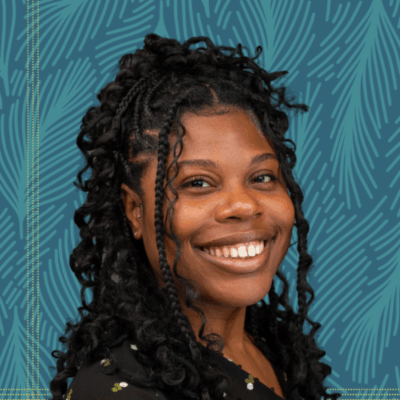
I think it better equips them with the language they need to describe their work and gives the opportunity to practice the skills and apply what they’ve learned. At the end of each cohort participants receive a certificate of completion signed by the Health Director, Dr. Rod Jenkins, and myself. Many participants put it on their resumes to add to their professional experience. I’m also happy to be a point of contact for references for folks that I get to know and that participate often over each cohort’s 5 weeks.
We think about our three A’s: accurate, actionable, accessible. One “accurate” piece is we have guest presenters come in for the community who are reflective of what our cohorts look like or who the Community Health Promoters may identify with. We, in the end, give them a huge resource book full of presentations and the resources that they learned in the cohort, that they can apply in their work with community after their program ends. They are required to do a community event. They have the opportunity to use their knowledge. We do teach back, an evidence-based health literacy technique. We teach them or we train them or remind them how to use teach back with the community.
Can you tell us more about making the program available to non-English speaking cohort members?
We make sure that we are prioritizing the cultural competence aspect of every program. We ‘ve done this program in three different languages. We’ve done the program in Haitian Creole, in English, and Spanish. Our guest presenters are reflective of our community. We tried to make sure that it was as accessible as possible. A lot of our community health promoters at the beginning were older adults. We made sure that we were available from the time that they filled up a form to the time that they were in the cohort; we made sure that we were making it accessible for them. We are celebrating our fourth anniversary in October.
I’m also a part of different identities myself. I’m American, but my family’s Liberian. I’m a child of immigrants. I’m first generation. I was the one who didn’t know the language. When I was navigating the healthcare system, I was a person who felt uncomfortable and there were friendly people and there were other people who were like, “Why are you in this country? You don’t know the language, right?” I navigated that. I have a level of empathy for people who come to America for opportunity and for different reasons.
Anything else you’d care to share with us about this work?
I learned (this job) over time by asking the Community Health Promoters. I always do program evaluations. We always listen to the participants. We always have feedback. I have 15 program evaluations. I keep them all because I want to know over time what we need to change. Are people still asking for the same thing? Keep it fresh. I am both, unfortunate enough to be the only constant in the program. I can quite literally recall what was that thing that happened in cohort one? I always keep documentation because I presumably would not always be in this position.
Something I just learned was not to always assume. It is never too late to start something new. Not all age ranges do the same thing. I keep doing this work because I really do respect health workers and the work that they do and the heart that they have to do this work. It’s not for the money. They are so committed and smart. I’ve learned a lot of life skills from them and I’ve learned a lot of empathy from them. If they don’t or can’t, I do. I collect so much data on their reach. I collect how many people they are engaging. I can tell you off the top of my head they’ve reached over 6,000 people through Bull City Strong. That means thousands of people have been touched by 300 Community Health Promoters.
What’s something you’ve taken away from this work, something that’s meaningful to you?
Oh, there’s so much. One thing I learned was that the learning process doesn’t end, no matter what age. Also not underestimating that people don’t know something or do know something because of age, because not all 21-year-olds know how to use Zoom, right? Not all 70-year-old need help with using technology. I understand that many older adults may not have gotten the educational background when it comes to technology, but that does not define their experience. Accessing, not assuming. I think at the beginning, we focused a lot on curriculum. But people have a lot of life experience, so making space for more conversation is important. I learned that over time.