Vision Zero is a project to end traffic deaths. In September 2017, Durham joined a global network and became one of the first cities in North Carolina to officially adopt a Vision Zero program. On average, 23 people die in crashes in Durham each year. The City of Durham and its partners have worked to implement projects and programs aligned with Vision Zero, such as traffic calming guidelines, improved transit infrastructure, sidewalks, and bicycle facilities.
Aging Well Durham spoke with Vision Zero Coordinator, Lauren Grove, about the work and its connection to aging adults.
I wanted to talk to you about Vision Zero, what got you interested in that sort of work and a little about you.
I originally thought I wanted to help people by being a doctor. So I was planning to go to med school. I ended up doing some research related to brain development and did that in Detroit. I worked with women who were at risk for delivering pre-term.
The women had a set of health conditions that just made it such that they were likely to deliver well before their due date. Most of the women that qualified had a very similar set of circumstances. And so we were doing all of this technical research, but I was more interested in the social piece of it. The women were mostly low income. They didn’t have more than a high school diploma if even that. They didn’t have access to transportation. They were no-vehicle households. They were Black.
It was the same sort of set of circumstances I kept seeing over and over, and I thought, you know, this isn’t right. The city should be providing these things so that they can get better access to healthcare. I just started asking questions and realized like, oh, this is a whole field, and it’s called urban planning. I just didn’t even know about it.
I feel that experience is actually related to the work that I do now in Vision Zero, which is having the infrastructure – providing people transportation options are only so good as to how safe it is to access those options. The crux of my work now is making sure that people can access transit, especially folks who don’t own a car. They can access our bus system, they can walk places, bike places, there are options, they are safe and they’re safe for everybody, regardless of ability or age.
(Inspired by her experience in Detroit, Lauren went to grad school for urban and regional planning) Can you speak to the intersections of race, economics, road planning etc, that you referred to earlier?
A lot of it is tied to lack of investment in areas that are traditionally Black or Brown communities that we haven’t invested in safe infrastructure, and we’ve overinvested in more wealthy, traditionally white areas. There are certain policies that my work impacts, as it relates to land use, where we determine what types of housing can happen. If we’re continuing to build out and build further away from resources, it’s really going to force people to have to drive because it’s really hard to continue to have transit service extend further out.

Cities only have so many resources, right? I think that comes into play a lot regarding how we’re continuing to just build further out. It really just makes it so that your only option to get places is a car, versus if we try to focus on associating these housing developments where existing transit is, especially frequent transit. I think that plays into the socioeconomic piece of this work. I don’t have to walk as far to get to my bus stop because where I live out the door is a bus stop. That decreases my risk of getting hit, right? I don’t have to cross so many streets or I don’t have to walk on a street that doesn’t have a sidewalk.
That piece, that land use piece, is integral. I also feel like it’s often overlooked how powerful of a component that is when we’re talking specifically about socioeconomic status. In the next 20 years, a majority of the population will be over age 65.
So how are we building places for people to still maintain their independence and freedom and access for getting around so that they can age in-place?
I was looking at Vision Zero’s map of Durham and I live on one of those red streets (that indicate high accident corridors).
What is your experience like living in a corridor like that?
When I first got here there were a lot of accidents, an unbelievable amount of accidents. Recently there has been a widening of the street or a rearranging of the streets, and there’s been some stoplights put in place that has really changed the game. There are many fewer collisions. I used to hear them every couple weeks, somebody smashing into something.
I’m so glad to hear that. The infrastructure piece and the street design component, is just so crucial to Vision Zero strategy.
Vision Zero is national, right?
Yes, it’s actually global. It started in Sweden in the 90s. There was an engineer at the time who worked in government, and there was a really bad crash that happened. There were five people in a car, driving. They hit a light pole. And the engineer at the time was noticing, “this keeps happening,” and started questioning the whole idea of why we call them accidents, if they keep happening.
What that means is, through a formal policy, a city will commit to the goal of ending traffic deaths. I think there’s probably 100 some cities that are formally part of the Vision Zero network.
I will posit this idea that these are preventable. Nobody had to die. There were roadway conditions. There were a set of design conditions, how the street was designed, that we could have incorporated and maybe prevented that crash from being fatal. It started there. Then in the US it trickled over in the early 2000s. Chicago and New York City were some of the 1st cities to adopt Vision Zero.
That’s very powerful what you just said about it not being an accident. It’s almost by design. It’s inherent.
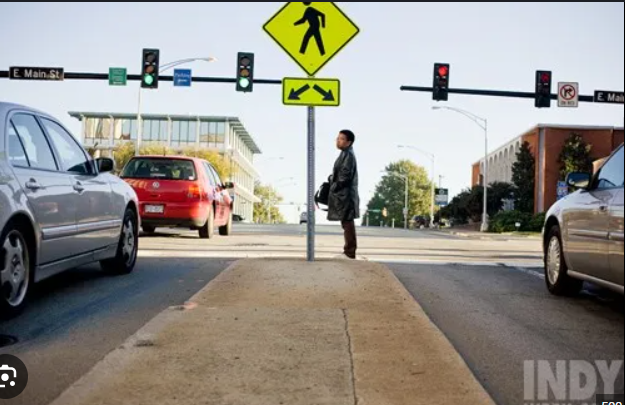
We’re human, right? We respond to our environment. That’s how our brains are wired. We are reactive. We are constantly assessing our environment for safety, for risk. We’re just a function of our built environment. That’s no different than when we’re behind the wheel, and there’s probably so much research to be done around that, but when we’re driving, when we’re walking, however we’re traveling, we’re just trying to fit into however that environment is designed.
Some roadways are designed for us to, without even thinking, go fast. We’re not really conscious of it. We’re just responding to the way that road is inviting us to speed. My passion is in street design because I’ve seen when we redesign streets for people, for safety, speeds go down, crashes go down, just like you were talking about, your experience where you live and you saw some infrastructure changes and it works.
Can you speak to older adults and do you have any statistics around older adults in traffic?
We have a Vision Zero data dashboard and it has some different tabs at the bottom that you can click on to learn more about the different types of fatal and serious injury crashes. I thought that we had by age, but we only have 5: driver, pedestrian or bicyclist, and then by ethnicity.
I think that could be a potential, something that we add here, because what I do know is that both younger children and older adults are more vulnerable in crashes. Older adults may not have the response times that they used to have, but then they’re also more vulnerable to injury, just by nature of strength, bone density etc.
I will follow up with that. As you age things are changing and you’re grieving a lot of things that you might not be able to do anymore. If we could make one thing a little bit more accessible to you, like being able to go out your door and go for a walk or say hi to your neighbor and connect with people. The crucial piece of transportation work is being able to create infrastructure that allows for that.
A big piece of Vision Zero is an action plan. The city of Durham adopted their first Vision Zero action plan earlier this year in April of 2025. That is on our Vision Zero website. You can look at the strategies within that action plan that we’re committing to. It’s some of the things that I mentioned, like updating our land use code to make sure that housing and transportation are talking to each other, and we’re designing safe streets. We’re doing a series of road safety audits.I would love to connect with Aging Well Durham and get y’all involved a bit more in those road safety audits.
We’re also trying to get projects on the ground quicker in what is called a quick build program. That’s something that a lot of cities do. They just use low-cost materials to go out to certain locations where there’s been safety concerns and do some quick safety treatments. So rather than waiting for years and years, it’s a way to just act more urgently on the safety issue. A little intervention.
The action plan is our guiding set of actions, and for now there’s a lot. There’s so much that Vision Zero touches on, like vehicle technology and education. We can only focus on so much. This set of actions is really honing in on what we feel is the most impactful with the resources that we have.
One last thing, Lauren, do you work with legislation or legislators to pass safety policies?
We do at the city of Durham have a team that’s dedicated to that. Just a quick note on legislation-when we were talking about children and vulnerability, the North Carolina legislation just this summer passed speed cameras in school zones. So I mentioned technology.
There are 2 different kinds of cameras that you can put up. There’s the red light running cameras that take video and they can capture when people are running red lights. There’s the same for speeding. So when people are speeding, the camera takes a picture of the license plate, and then you get ticketed. The legislation in North Carolina just passed for that to be allowed in school zones.
It’s very effective, very, very effective at bringing down speeds and we know that.
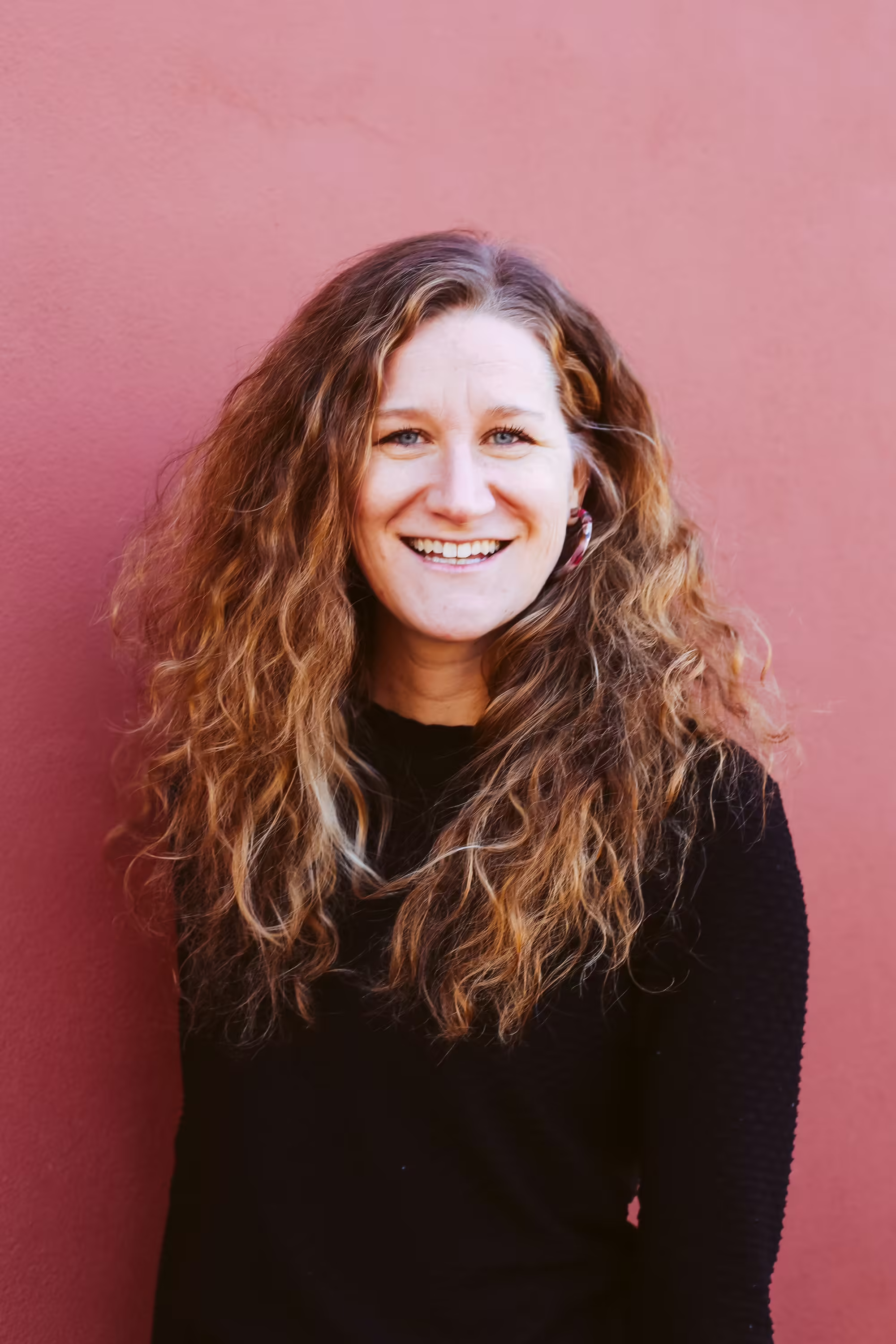
Lauren Grove is the Vision Zero Coordinator for the City of Durham, leading efforts to eliminate traffic deaths through data-driven planning, cross-departmental collaboration, and safe street design. With a background in neuroscience and urban planning, she brings a public health lens to transportation safety and works to embed Vision Zero into the core of city systems and culture.