Would you introduce yourself please, and tell us your title?
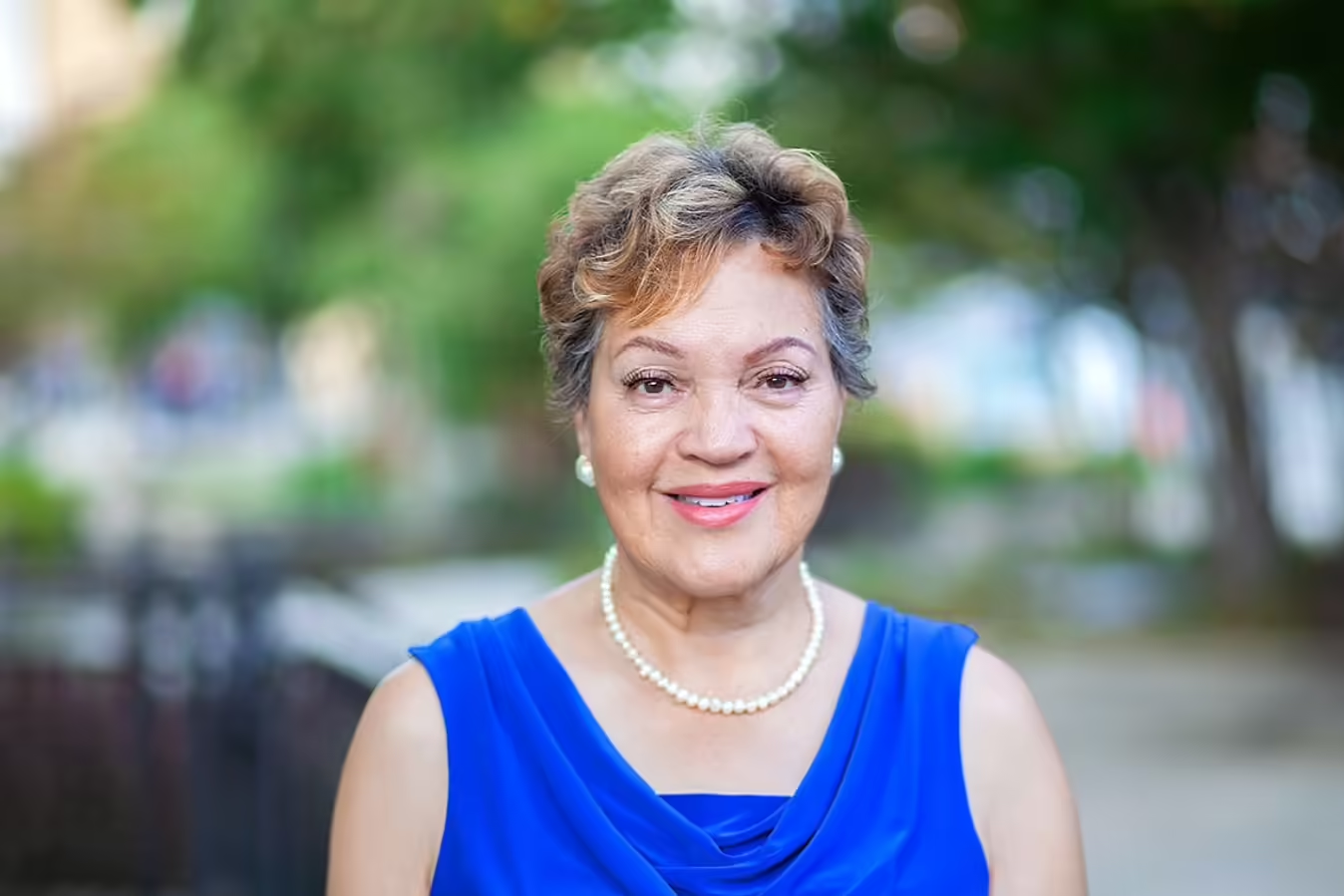
I’m Joyce Page, and I am a public health education specialist here at Durham County Department of Public Health. My title is Coordinator. I’m the head of the Men’s Health Council, and I also do other activities as a public health education specialist.
I am a master trainer for Chronic Disease Self-Management programs and a master trainer for the Falls Prevention Program. They’re both licensed programs that have been in existence for more than 30 years.
Really?
Mm-hmm. The Falls Prevention Program started in the 1980s so that would give them 30 years, and the chronic disease self-management program started at Stanford in the 1990s.
They’ve been around, and they have proven to be successful when you follow the curriculum. And, well, you went through the program. You went through the Chronic Disease Self-Management Trainer program.
I did. I went through Chronic Disease, and I liked it a lot. I thought it was really interesting and helpful; peer to peer education is a fantastic way to transmit information. (The training was directed towards teaching us to facilitate the curriculum in our community.)
The one that has become my favorite now because of my age and the different things that come along with getting older, is Chronic Pain Self-Management. That’s the one we just did. After you get to a certain age, I think you’re going to deal with some pain. And from falls.
So they’ve been around for a long time.
That was done over at the Durham Center for Senior Life, and it was very, very successful. We had 18 people attend, and over 85% of them continued. It was highly unusual to have such a large attendance, and I loved it, you know.
That’s incredible, because you get people who are Durhamites, right? They’re just people on the street.
Yes, yes. But this group of people were folks that had been through other programs and people who had just completed the Falls Prevention program at the Durham Center for Senior Life.
Nice.
I love the fact that we had a diverse group of people. We had Blacks, whites, and we had people from different countries.
Oh, wonderful.
So I think that was the magic.
People loved getting to know each other better and talking with people who they don’t usually see on a daily basis. They got along very well, very supportive. They want to help another one, so I’m happy about that, yes.
That’s amazing.
It is. Usually, sometimes you think people are going to be counting down the days, but usually with the Chronic Disease Management programs, whether it’s diabetes or just general chronic disease or pain, people tend to want to continue. It is a support group as well as a learning activity.
You were such a great participant. And you’d be a great facilitator.
That was my experience, that it created a mini community, and we were all very supportive of each other and wanted each other to succeed, and that made it worth coming every day.
You were just such a great instructor, so thank you for that.
Thank you.
So, Joyce, where are you from, and where did all this love, or maybe not love, but this pull towards public health come from?
I’m from Durham, North Carolina. I grew up, my life has been centered around Fayetteville Street. I grew up on Fayetteville Street near North Carolina Central University and behind the Lincoln Community Health Center.
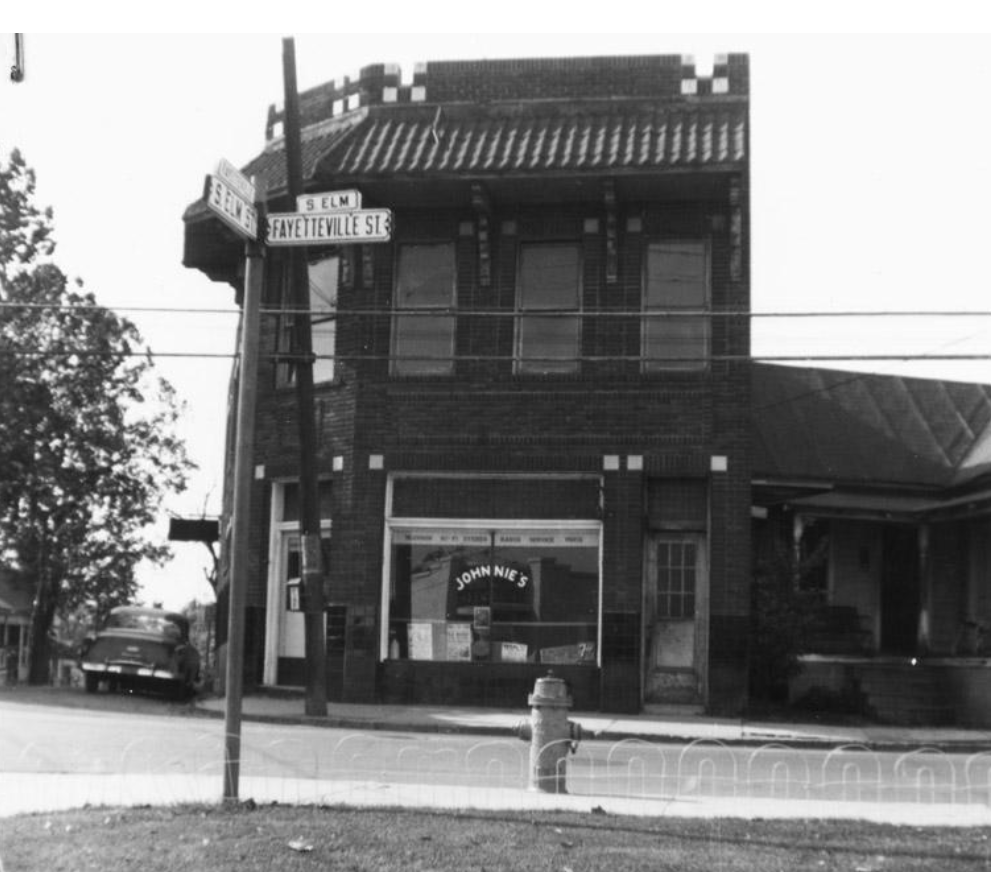
All the places I went to school were off Fayetteville Street except for going to UNC Global Public Health Graduate School.
But my elementary school, my middle school, and my high school were all within a block off Fayetteville Street. I always wanted to work in Durham County. I wanted to work at the Health Department. And I wanted to work at North Carolina Central University. Those were my two ambitions.
I got to work at North Carolina Central for 12 years as a Purchasing Officer. I left Public Health for a while because NCCU had an opening for someone to buy, to head the Purchasing Office.
I had spent six years purchasing scientific and medical equipment for the state.
So when the opportunity came up to go to Central and work, I was excited to go there.
I love North Carolina Central because that’s where I graduated from. But I didn’t love purchasing and I wanted to get back into Public Health. So when I got a chance, I went to the State Office of Division of Public Health and worked in Diabetes.
What was it about health in particular that you just discovered you liked?
I loved nurses and nursing.
I loved the idea of being a nurse and where I grew up, my grandmother lived on Fayetteville Street across from Lincoln Hospital. Next door to her home was a family’s business, a grocery store where my father and uncle worked. I would sit on my grandmother’s porch and watch the doctors and nurses go in and out of Lincoln Hospital. And I thought the nurses were beautiful.
They had, they wore these white uniforms. They had a blue cape and a short blue cape. They were so pretty. They had little white caps that they wore, you know, this was back in the ’50s.
I thought helping people was the best thing you could possibly do. My family taught me that you always have to help your fellow man out. You help the neighbor out. You’re kind to your neighbor.
Partly because they had a business that depended on the customers, they would say, “Always treat our customers with respect. They’re the ones that keep us in business. They’re the ones that keep food on the table.” So you treat them kindly.
My uncle and father did that, but they would go beyond just being nice to people when they came into the business. They gave food to people. They would loan money to people, which often they never saw back. They gave, they would call folks to assist neighbors that were doing poorly.
There are life-changing events that I saw people do, by just taking a little effort, and it made you feel good, it makes you feel really good.
It sounds like your dad was not only a generous and kind man, but he was an advocate, which you are too, you have that too.
He did advocate, but he was a soft-spoken man, but he advocated for people who needed it. If he saw something wrong, there were enough people coming in and out of the grocery store from everywhere. The doctors would come in, the professors down in North Carolina Central University, and the ministers. It was a gathering place because that was the old way. You go and you talk. You go to a grocery store and you sit and you talk to each other.
He knew a lot of people, and they respected him as a decent person. It made a difference
That’s incredible. Moving a little forward, is it true that you were one of the first Black students at UNC Gillings?
Yes, yes. My sister Anita was three years ahead of me. She was closer to the front, but I’m sure it had been less than 10 years. That’s a good question. When was the first student admitted?
I can look that up. (William A. Darity and Edward V. Ellis graduated from Gillings School of Public Health in 1964.)
Anita was part of the Minority Health Caucus, Minority Student Council. I just can’t remember if it was called the Minority Student Council, but they formed a student council. Anita was part of the group that formed that student council that started the Minority Health Caucuses that continues now.
She was in that first group of students that decided: in order for Black students to survive, they needed to come together and be advocates for each other.
That’s amazing.
Yes, it is. And that’s when John Hatch came into our awareness. John was a graduate student working on his Doctoral degree, and Anita was a Master’s student. (Dr. Hatch’s work with Jack Geiger, MD, in the 1960s, at the Delta Health Center, in Mound Bayou, Mississippi, proved the value of community health centers, especially in Black and rural communities.)
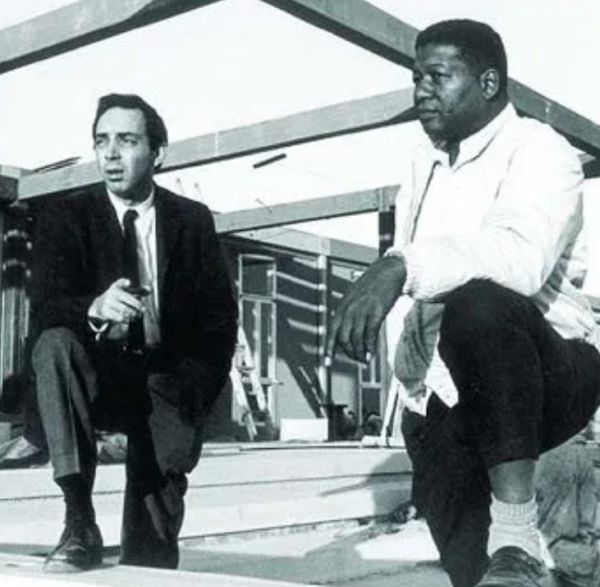
John is a good bit older than she is. He had been out working and came to the School of Public Health because of his work in Moundt Bayou. Moundt Bayou specifically asked him to come and get a degree and teach others. He already had a Master’s in social work. His work is fascinating.
Anita is writing a book about John’s life, with John, and with another lady who’s writing about Gary Gunderson, who also worked in Mississippi. Gary is white, John is Black, and their paths crossed. Now they do an annual John Hatch lecture out of Winston-Salem.
Gary hired Anita to form these lectures, annual lectures, because of her relationship with John over the years.
They’ve been working on this book for a while.
Oh!
She’s had me read and edit and contribute and it’s one of the few books that’s academic that I can’t put down. I wanted to keep knowing more about these people and their life stories.
How they came to want to change the health environment for people who are underserved.
It’s fascinating. She’s a great storyteller.
Did you work with John Hatch?
I did. And I worked with Anita, too. That’s what got me in health education.
I had an aunt who was a health educator. She taught, she was working at the Lincoln Community Health Center and at North Carolina Central. She was a health educator. I typed her Master’s degree, her thesis. Back then, if you typed, if you made a mistake, you had to start over again.
Oh, yes. I remember!
You had to find out. Because I was in high school and I was really curious, I thought, oh, this is interesting. I like this. I like this. I thought maybe I’d go into medical school. That didn’t fit me.
Anita went into health education. I thought, well, I can’t go into health education too, because she’s there. I was going to go into health administration and do hospital administration. I went into health education. I went into health administration. That’s what my degree is in.
I saw how Anita was working in the community. I liked what she was doing. I got an opportunity to go to Stanford and go for some training in diabetes. She was working with a program, the General Baptist State Convention.
The General Baptist State Convention received a grant from the State Division of Public Health to go out into the communities and do diabetes awareness sessions. Because I had a chance to go for the chronic disease program, they asked me if I was interested.
Of course I was. I said, absolutely, I’d like to do that. At the time I was working as a purchasing officer for North Carolina Central University. When I first started, they took me through training.
Then I went with the General Baptist and I used my background in public health to go through training on diabetes.
On the weekends, I would go out into a community and facilitate a Diabetes Awareness session using an evidence-based program called Diabetes Today. You followed the script. I got to go out east and I got to work with several small communities, in the Rocky Mount area and out west, past Asheville, where there are these small churches.
I just loved it. It was wonderful.
What a wonderful opportunity.
That gave me the chance to get hired by the state.
When you left school, where did you go?
When I left UNC, I was hired by the Department of Health and Human Services, the federal government, and worked there in evaluation, public health evaluation. I joined the service corps, the public health service corps, which is a non-military arm of the government. It’s a service organization, but it’s not military.
Interesting.
You can wear a uniform and you can be called out, but you just don’t go into combat.
I see.
And I never got called anywhere.
Yay.
Yes. Which is really nice.
Joyce, as you know, AWD is the backbone of the Comprehensive Aging Plan and health education–particularly for underserved or minority populations– is a huge component of that. I’m wondering how health education in Durham has shifted the landscape for minorities, people of color, LGBTQ people.
Have you seen a difference over your time with the Durham County Department of Public Health?
In my 13 years here, I have seen a lot more involvement. In public health education, I see outreach; our programs are focused on health education, health promotion and wellness. We do programs in CPR, mental health, suicide prevention, and the chronic disease programs, movement, falls prevention, support groups, diabetes, and hypertension.
I’m pretty sure they were doing a lot of this before I came on board.
When I was at the state, we brought the chronic disease self-management program that you went through to the local health departments, and Durham County was one of the very first ones to go through the training. I did the training for them, and then I had the good fortune to get to be hired by them.
I’ve seen a lot of people join the Chronic Disease Self-Management programs, the Falls Prevention program, by going out to them, by getting out to the churches, to the local recreation centers, to the local libraries, to organizations.
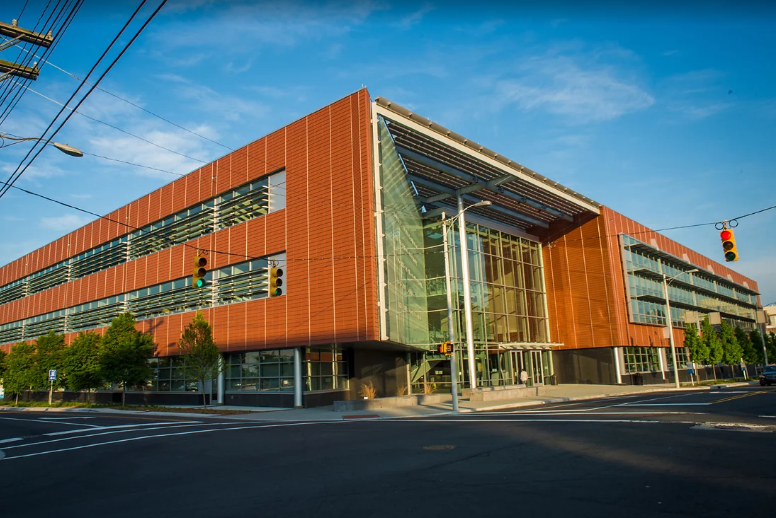
We’ve done training for our Lambda sororities. Now we go with Durham Center for Senior Life, we go to the Durham Housing Authority properties like Preiss Steele, and several others. We go to JFK Towers as well.
But it’s the Men’s Health Council that I’ve seen the biggest change. That I’ve seen in the increase of the number of men who have gotten involved with our public health programs. And that’s because of the program I’m working with. It’s a health education unit. I think we’ve had 30-some people in this unit.
We have the people who do HIV testing, STD testing, communicable disease, maternal and child health, helping with the young mothers going through pregnancy. That’s a different unit.
Duke has some outreach programs trying to get people involved in clinical trials and they provide education that way. North Carolina Central University has a program that Leatrice Martin has along with Hilda Smith, (healthy aging) that is doing a lot of outreach and education. They’re reaching people in all categories.
When COVID happened we all partnered and that was a wonderful time when everybody was partnering to get COVID testing done, to get people to the services they needed.
Were you collaborating with people you hadn’t collaborated with before?
Yes, yes, yes.
And the categories of people we collaborated with were probably the same ones, but there were more of the churches reaching out. They were trying to get their members with services.
I started doing what I consider a service, sending information out to a community about activities and webinars and Zoom. Because then people really wanted to get connected and find out.
And now it’s stuck. So I do that. I’m full of the Aging Well materials, and I’ll send that out too.
It should be different. It definitely should be different. I have seen a connection with numerous programs that provide services for men where they want the men to be part of clinical studies.
You really do a phenomenal job because you’re talking about really life changing workshops and events and the men’s health focus that you do. Men die younger and they are resistant to going to doctors. It’s really critical work that you’re doing.
And they have, especially at Duke, also UNC.
But they have asked to be part of the Men’s Health Council. They’ve asked to be part of it, to present. They’ve gotten men on their board.
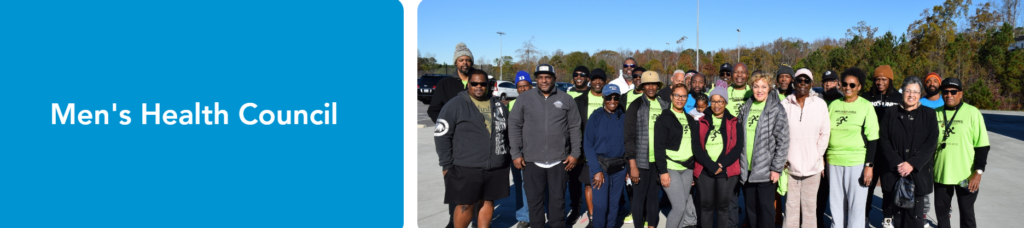
Members of the Men’s Health Council have become part of their community advisory boards, and a lot of men go out and do presentations. Even the men that have been trained to do Chronic Disease Self-Management and Fall Prevention give presentations.
That’s wonderful.
I’ve seen them love doing the workshops and just presenting, I mean, they just love it.
That’s so great.
It is great. And people like hearing them. There’s something about having a mixture of people that’s very important, having everybody represented is important. I think having the Men’s Health Council has made a huge difference to health facilities, health research, researchers having a place where they can go and have an audience.
And that’s good.
That is good. One of the things that occurs to me as you’re talking is that minorities, marginalized people, are sometimes afraid to go to the doctors or fearful of health institutions.
Yes. They have been mistreated. Overlooked. Not seen and valued. They’ve not been valued.
Or respected, over the years. And so there’s a fear. It still happens. We’re fortunate that it doesn’t happen as much.
We’re fortunate that it doesn’t happen as much and you’ve got recourse – there’s enough people out there that will advocate for you. In those facilities, if you do have a bad experience you can talk to somebody about it.
We have several doctors that come to walk our monthly walks and one doctor at Lincoln comes to probably at least 50 percent of them or more and she brought her patient, who has become a big advocate and recruiter for us. His name is Willie.
Willie will recruit family members and friends, he comes and he helps us with set up, he attends workshops, he’s amazing. He loves that the doctor’s name is Dr. Biola. He likes her not just because she’s a wonderful person but because he knows who she is and he trusts her. If he has questions he asks her, and if he doesn’t feel comfortable with the physician, she’ll talk to him and help him get into a situation where he’ll feel comfortable. He refers other people to her and she responds.
We have a Dr. Wilder at Duke who comes out and speaks and a Dr. Arnette Coleman, a
retired physician from Duke who will come out and do workshops on aging, on high blood pressure. He’s done those things for us and he came to us and said if there’s even a chance to talk to him he’d like to stay involved. If there’s some way he can help, let him know.
He goes out to the senior centers with me when we’re doing Falls Prevention and he does a session on preventing falls or understanding aging and why people who get older fall more frequently.
That’s really incredible and as you said, representation is really important too. We need to see ourselves in somebody. It’s really that mix, that diversity that you talked about that’s so important.
August is National Health Awareness Month and you’re leaving us to retire, but your groups will live on as we know! Can you talk about the Men’s Health Council, the diversity, and how it’s impacted them?
In 2014 we got a group of men together to talk about ways to get African-American men to come into the fold and attend health promotion programs because they were suffering twice as much or more from diseases. We talked for over a year and then within the second year we started having forums, and then in the third year we did a walk and people enjoyed the walk so much that someone said, “We need to walk, we need to do something.”
Now men and women and children come. We have a range from an average of 30 to 60 people who will walk each once a month. Of course the summer and the winter months tend to have fewer people, but in October, in November, we had a walk and we had 60 people there and they were all ages. Sometimes there are groups that would come in like the AKAs*, who came in so we had over 60 people.
Sometimes they come back, sometimes they get the husbands to come. The numbers are increasing where we used to have 13 to 17 people. We felt good.
That’s a lot of people.
Over a three year period it’s going to be even bigger and we have a person who comes and speaks to provide information and we have some vendors that would come and set up and provide information, and we didn’t ask them, they’re coming to ask. It’s a nice thing that we have these people come to us to say, “Can I speak to your group ?”
Wow, so a lot of it’s happened just organically it sounds like.
Yes, I like that word, yes that’s right, that’s very cool!
Shelisa (Howard-Martinez, the Executive Director for AWD) mentioned that you and she worked at a faith-based Council in Hyde County? What was that about?
When I was working with the state I was doing the diabetes self-management program that I brought here and they were looking for the locations that had the worst cases, had the highest rates of diabetes. Hyde County had the highest levels of diabetes prevalence. We were also looking for the least resources and the greatest disparities.
I didn’t think I knew anyone there, but it turned out that one of Anita’s classmates was from Hyde County and my aunt who’s a diabetes educator had taught him His name was Archie Green and he is very active in his community. He headed the Hyde County Baptist Association so we suggested that it would be nice if we could go out there and bring the program to them.
It turned out that he was also head of the Hyde County Toy Truckers. That’s a group of men who love their trucks– because everybody there has a truck thing–- so they do things together and they participate in parades and have the nice shiny trucks that will go down the street.
We went down and we met with Archie. I hadn’t seen Archie in at least 20, 30 years but we said “Archie, you know you want to work with us,”and he got men involved. I had said “You know, we need men, we don’t get many men.” I was motivated to reach out to men by going to men’s groups and asking “Will you be a leader?” I learned from another program I’ve worked in in Raleigh–it was a research program funded by the CDC called Project Director–and we discovered that men attended more groups if they were in charge. If we put a man in as a leader we could get more men!
Hyde County was that; over 30 percent of the population is African-American so that the whole grant was given to increase awareness in the African-American communities. At that time Blacks were almost twice as high in prevalence of diabetes compared to whites, so we looked at Hyde County. And a couple people told me “Oh, I know Hyde County.”
They had to have a role so we went to Hyde County. I said “Will you all lead this program?” and they did. They went through training, and there were women too. The men have always said “We need women too because they are our supporters, and we can’t do it without them.”
So we took the Hyde County Toy Truckers men and they became trainers. When I went out west to an area called Brevard, the minister there was head of another Missionary Baptist Association and he said,”We’ll bring this to the pastors,” of the different counties that all belong to this Association.
Reverend Fred Gordon had diabetes, and he took the Trainer’s course. We have a group of men pastors that went through the training and then they took it back to their churches. That’s how I got motivated to reach out to men.
That’s amazing. You were able to really spread the knowledge. Did they give you a ride in their fancy trucks?
I don’t think I ever rode one and they’re quite spectacular, aren’t they?
We in the community are so grateful for you and all the work that you’ve done for all of us, and now you’re retiring. Do you have big retirement plans or is it time to rest?
I do have plans but I do also plan to stay connected with public health, with Community Health. I’m not going to another job but to some extent I want to stay involved in programs and I also want to be a participant in a lot of the programs like at the Durham Center for Senior Living. I want to do some traveling and some education and some creativity because I love the arts.
I want to go to plays, take a creative arts course and maybe do some sewing or crocheting or something where I’m creating and that’s relaxing.
That sounds wonderful! I’m envious. Is there anything you’d like to leave us with or shall I let you go?
Thank you. You’ve sparked a lot of conversations for me. The only thing that I would leave you with was an appreciation for what you and Shelisa are doing. As I age I recognize how valuable it is to have programs that advocate for us and for the diversity of all of our communities: LGBTQ, African-Americans, Latino.
Seniors, when we come together we make for a beautiful group of people who can do something very positive. I’m just grateful that I live in Durham where we have open-mindedness and people like you and Shelisa.
*Chelsea Hawkins’ sorority. She’s the AWD Livability Program Coordinator.