Geriatrician Yoon Hie Kim spoke with AWD about older adults, how we age, how we age differently, and what may lie in the future of geriatric medicine. This interview is to underscore the vision of the Community Support and Health Services domain in the Durham Comprehensive Aging Plan – “an age-friendly Durham providing a fair and just opportunity to achieve wellness and well-being for all
older adults.“
What was it that got you into geriatrics? That’s a very specific direction to study.
My grandmother lived with us growing up so I’ve always had a strong appreciation for older adults. Then I worked in business for a couple years in DC, and during that time, I volunteered at a retirement community. I found myself enjoying my time there, finding more meaning in that work and that environment–more so than my desk job. So after some introspection, I was motivated to go into medicine, and specifically geriatrics.
One of the things I most appreciate, then and now, is that every patient is different. It’s not like a pediatrician who only works with babies. Newborns and babies can be different, yes, but they have developmental markers the doctor will be looking for. Everybody brings different things to the table as an older adult: your upbringing, your experiences, where you live, genetics. There’s not one way to age.
I feel like I’ve always had a healthy appreciation for older adults and all the qualities and life experiences they bring to our lives. I think trying to honor older adults is something that’s important to me, and something that I think is really important to everyone working with this population. I don’t think people go into geriatrics or working with the aging population, without that kind of sentiment or mindset.
Right, that special connection. What actually qualifies as geriatric? I was thinking about this.
Usually it is 65 and over, and sometimes we’ll see younger people who are walking through patient space right now. They’re people who might be more frail or have some cognitive impairment, or what we call geriatric syndromes. Some of those include frailty, cognitive changes, or cognitive impairment, frequent falls, or polypharmacy.*
Just because you’re not 65 we try not to just use age as a cut off, but rather as a guide, and think about the bigger picture. For example, in the hospital, we’ll see people who are younger if they have significant geriatric syndromes and we may be able to help them.
You know, provide some helpful recommendations.
Yes, you mentioned falling and polypharmacy.* These are things that can contribute to dementia or can be mistaken for dementia. Is that right? Like head injuries, things like that?
Yes, absolutely. If someone’s on multiple medications that affect their cognition or the way that they think and function in day to day life, then some people can mistake that as dementia or cognitive changes. It’s helpful to have a comprehensive assessment–that’s what we do in clinic, a comprehensive geriatric assessment where we look at the big picture.
There are the crucial “M’s” of geriatrics:
- mind,
- mobility,
- medications,
- multi morbidity,**
- what matters most.
We’re using what matters most as the framework for approaching the care for an older adult.
I love that. I have a question. There’s going to be more people who are older in our future. Are older people staying more youthful now as they age?
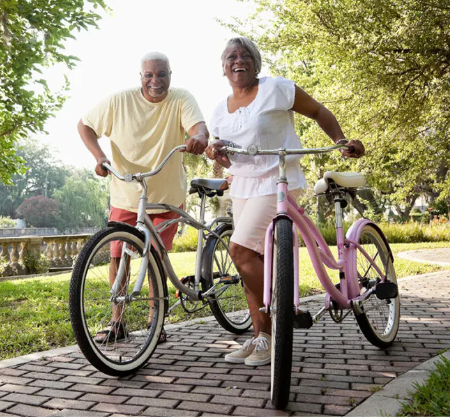
Yes. I think there’s been a shift, a good shift in wanting to focus on healthy aging and aging well, like the name of Aging Well Durham, because we are looking less at the number of years and more at the quality of years. I think people are understanding that quality of life is really important, especially from seeing loved ones go through certain experiences. People want to put more focus on aging well and healthy aging, whatever that looks like to them. For some people it’s trying to live physically healthy. For some people, a glass of wine at night brings them great joy, emotionally and mentally.
There’s not a one-size-fits-all. You mentioned in our last conversation that while you certainly did not want to encourage certain behaviors, if you’re 90 and you have a glass of wine at night, if that improves the quality of your life, then that’s okay.
Allowing and honoring the joys of life and what people want, again, what matters most to them. I think that is so important, treating each individual as their own person, because they know themselves best, and making sure that we’re listening to them rather than just treating every single geriatric person the same way.
A 70 year old is very different from the 70 year old sitting next to them, same with 90 year olds. There’s such variability in how people age and what healthy aging looks like for each individual.
We talked about the impacts of poverty or lack of access to health care and how that can impact older people as well. That more marginalized populations tend to come in with more health issues, possibly or age differently.
Trying to meet people where they are and understand that just because my definition of healthy is one thing doesn’t mean that it’s that person’s, and so also recognizing that there are different populations. Poverty can certainly play into access to health care, access to resources such as transportation or support systems.
For instance, technology can help or hurt, depending on the kind of access a person has to it, are they tech savvy? A lot is changing these days, and quickly, so people with resources and a knowledge of technology can probably care for their loved one more efficiently.
So how do we correct this field so that:
- People can get air tags
- People can install cameras
- Any tech that may help people live as independently as possible, is possible.
Those are some things that we often suggest, but obviously not everyone can afford that.
Trying to find ways to make sure that we’re looking at this big picture, too, for all aging adults, and advocating for what we think can be helpful for everybody. The population of people over 80 is expected to triple by 2050. That’s the WHO statistic. With that tripling, we don’t have enough resources and facilities for all older adults, not that they all need it. But for the ones who do, how can we effectively and safely care for people in their homes, or in their loved ones homes, without crushing the caregiver or a care provider.

That would be where technological equity, or digital equity really plays a strong part.
I think so.
There’s so many different nuances that come into play, because, again, not every older adult is the same, and so not everyone is going to have cognitive impairment, not everyone is going to have physical limitations. Some will, some won’t, and some will have a mixture. It’ll be tailoring it to what that person needs.
It’s so great to hear that, because when I was young, older people got pretty cookie-cutter care.
Absolutely. I’m hopeful that as the aging population increases, and older people make up a larger proportion of our society, that we are able to put into place different policies around health and safety. Policies and safeguards in place to support the aging population. Because something’s got to change. We can also look at other countries that do this well. We can do planning, urban planning and city and town planning with the aging population in mind, and being able to incorporate more of that care.
That’s so great, because that’s what our Durham Comprehensive Aging Plan is about. It takes into account buildings, public spaces, transportation…(to read it, click this sentence.)
That’s so important because it’s really hard, and a common complaint we hear is lack of transportation. Yes, we say someone shouldn’t drive, and then suddenly, if there’s no one to drive them around, or provide that transportation, then they’re stuck at home, socially isolated, not able to have conversations, and have those experiences that they need and we need to improve our our lives and society and enrich their own lives. I see a lot of things like depression and mental health struggles in older adults because of this social isolation that might come from loss of independence, from driving and all those things.
I’m not surprised to hear that. But are there some things to look out for, that you can speak of, of things that are coming in the future?
I’m hopeful that technological advances and even AI, will help us in thinking outside the box of how to care for older adults. This growing number of older adults because within the current system, we’re doing what we can, but in 10, 20, 30 years, we’re going to have to do more. And there is a decreasing number of geriatricians. We need to get smarter about how we care for people and larger populations of people, groups of people. I think working together to look at trends and patterns, to see where we can work smarter, I think it’s really important.
There needs to be smarter people than me to think of policy changes and technology that allow people to stay at home safely. We might recommend devices like a camera or communication system for adults with cognitive impairment or frailty – not to spy – but to make sure that medications are taken correctly or just taken, or that someone hasn’t fallen, and they’re able to check in. Even if they don’t have their phone on them, they’re able to drop in through things like Alexa.
Being able to use those things is really important. Maybe ride share services, I think transportation– being able to bring that to older adults— will decrease stress and make space for people. Even now, we’re using technology for example, if you know the care partner, if they have to work, then we can just put them on speakerphone during the visit or FaceTime them in during the visit. They don’t have to physically leave work and be there, especially if the person has a ride or is able to take the bus or do their own thing,
There are quick, creative work-arounds.
Putting all our heads together to come up with these, to continue coming up with creative work arounds so that we’re able to serve this population more efficiently is going to be really important. There’s new things every day. This isn’t really a patient thing. It’s more for us, but we’re able to chart a little bit faster because we have AI helping us with our notes. I don’t think we’ll be able to see more patients, necessarily, but at least it can help improve provider burnout, because we’re not writing our notes all night! That’s not really something that the population will feel, but will bring some joy back into practicing medicine. We’re able to focus a little bit more on the practice of medicine and the connection, rather than looking at our computers.
Thank you so much for spending time with me twice. I really enjoyed both of our conversations!
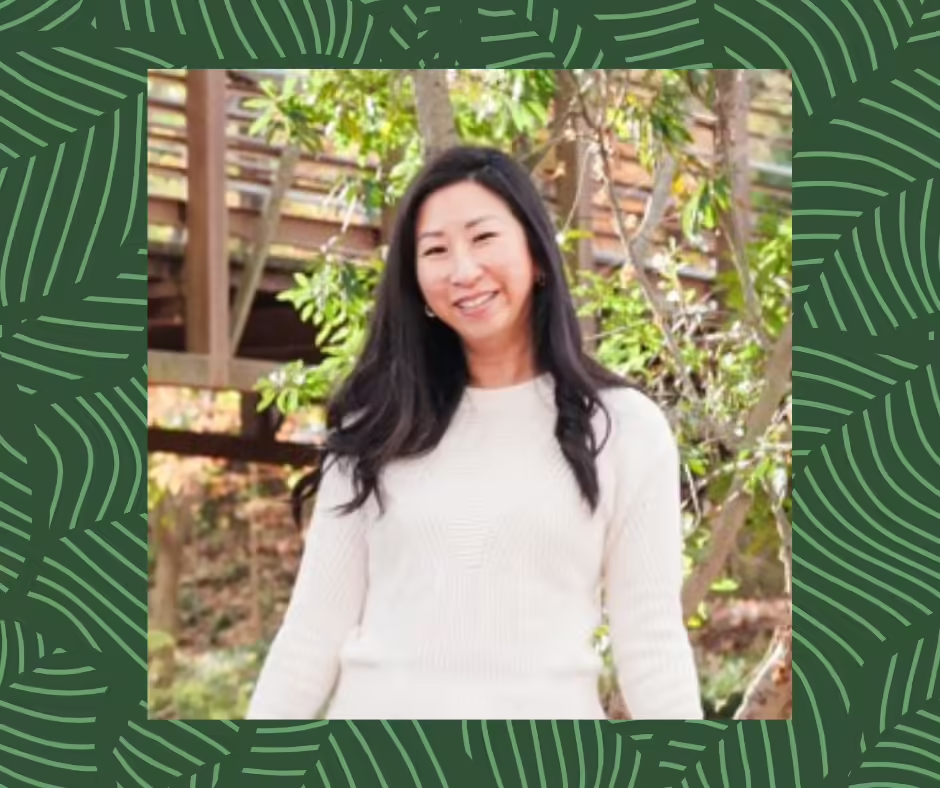
Dr. Yoon Hie Kim is a board-certified geriatrician who grew up in Durham and now cares for older adults in the community she calls home. She is passionate about helping seniors age with dignity, dementia care, and supporting families navigating complex medical decisions. She works in the Duke University hospital system and sees patients at the Duke Geriatrics Evaluation and Treatment (GET) Clinic. Outside of work, she enjoys exploring Durham and the surrounding areas with her family, including the vibrant food scene, local parks, and community events.
*Polypharmacy means taking 5 or more prescriptions daily. Sometimes the use of different medications can cause adverse effects such as dementia-like symptoms.
**Multimorbidity means having two or more chronic medical or mental conditions, like having diabetes, and hypertension, and asthma at the same time.