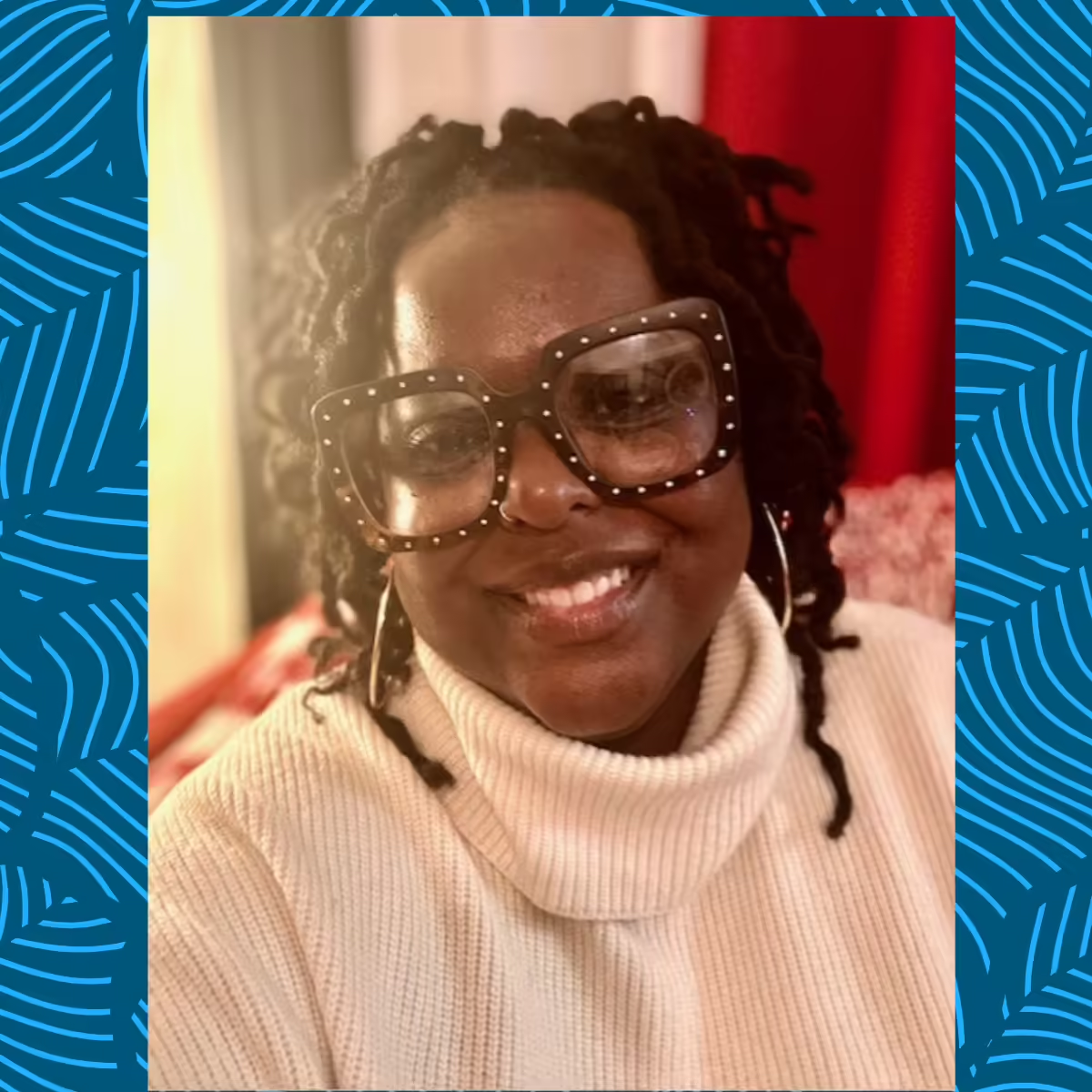
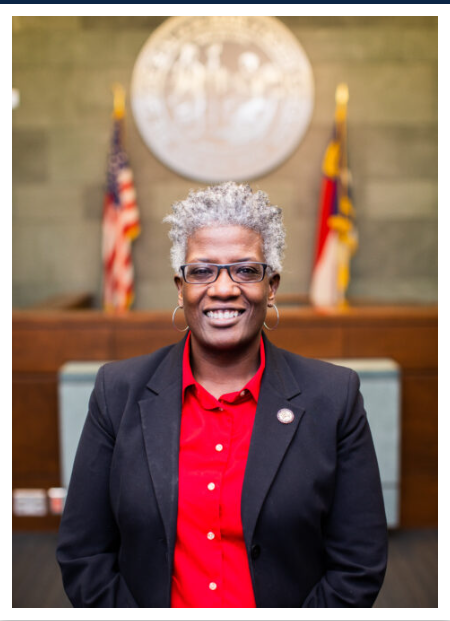
Satana Deberry has been the District Attorney (DA) for North Carolina’s 16th Prosecutorial District, which covers Durham County, for seven years. She has been practicing law for 31 years. The focus of her career has largely been on impacting and changing the systems that restrict the lives and opportunities of communities of color, rural communities, low-income people, women, children and people who have disabilities. Her goal as a lawyer is to push the legal system to protect the least of the community, not the most powerful. (From the Indyweek February 7, 2026)
DA Deberry, how did you get into this work?
I was doing affordable housing work and community economic development work. I’ve been general counsel for the North College Department of Health and Human Services. I’ve done Medicaid, and mental health, and childcare, all these other things, and all these different systems. I was trying to see how they all play together. For example, wage equity. People weren’t making enough money, so they couldn’t afford housing, they weren’t getting health insurance. It can make you feel helpless.
All of these systems play into it, and that includes the criminal justice system. Some folks I was working with in my affordable housing and community economic development work were also doing criminal justice reform. They had started to bring me in on some of those conversations, for example, all the collateral consequences to have a criminal conviction.
Not just you personally, but for the community at large. For instance, did you know that there are criminal justice statistics in your credit score?
Wow. How?
If you live in a community in which there’s a high incarceration rate or a high crime rate, you pay more because you have a lower credit score. You pay more for car insurance, homeowners insurance. You’re less likely to get a loan. Your credit score can go up as much as 100 points just for moving zip codes. Not doing anything else.
Please say more.
I had been working with those same folks I was working with in my affordable housing and community economic development on that issue, and they had also been working with the court systems. One of the places that they consistently felt blocked was at the DA’s office. They felt they weren’t having good interactions with law enforcement. They had made some inroads with the judges, but always felt blocked at the DA. They were looking around the country and saw that there was this reform movement happening where people like Larry Krasner (notably progressive or “reform minded” Philadelphia mayor), Kim Fox (another reformist politician), people who were not typically prosecutors had been elected as the DA. And they came to me and asked me to run.
They asked me a few times. I was like, “Who would vote for me?!” I have strong opinions about the types of things that could create issues, I’m queer. There are all kinds of things on which people could pick at to say, “ I’m not gonna vote for her.” But you know, sometimes you’re in the right place at the right time, and people in Durham were ready to hear what we had to say.
I got here, and we, I think, had done a good job, and I’m in my third term now so…
I feel like Durham is unique in that it really understands, as you say, how all these systems play together. I feel like people intuitively understand that. You know, that poverty has an impact, race has an impact. Food access, and…
Yes, the social determinants are something we’re very focused on.
Which is great to hear. Can you talk a little bit about how age might impact your work or does it?
We have about 100 years of criminal identity research, and one of the things that we know is that there are social determinants of crime. You are most likely to be engaged in crime, between 16 and about 24.
Interesting.
Then, if you can get people through that stage of their lives, and their brains mature, and they start to have families of their own, then your community is much safer. That’s one type of crime. That’s violent crime.
We also know that older folks are more likely to be victims: caregiver abuse, fraud, and neglect. Somebody is coming to your house every day. They know your routine. They know what you keep in your checkbook or where your money is etc. As you become more dependent on other people to do things for you, you’re more likely to be a victim of that kind of fraud. You’re more likely to be a victim of a scam.
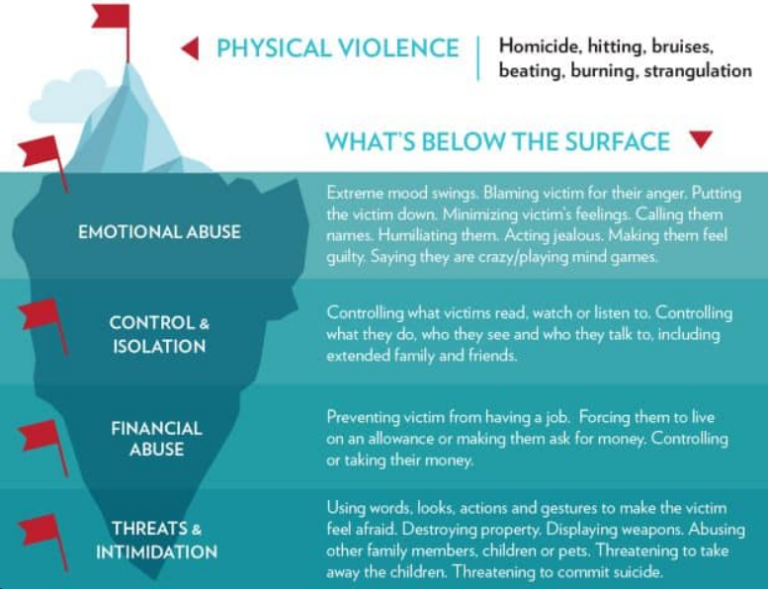
We see a lot more financial abuse and financial crimes against older people. Then sometimes you are more likely to be a victim of actual violence, right? Whether that is intimate partner violence, or caregiver violence. You’re vulnerable, as we age, we get…
More accessible to crime?
That’s correct.
Are you from Durham?
No, I am originally from Hamlet, North Carolina. That’s where I grew up. I graduated from high school there. I have an undergraduate degree from Princeton, and AJD, and an MBA from Duke.
Very impressive. Very impressive. Wow. Switching tracks, we know that there are trends. Are there trends in our city for violence against older people that you’ve noticed, or are we in alignment with the rest of the country, data-wise?
I think that the biggest threat to older people, the most vulnerable people, is financial fraud. Financial fraud. I don’t know about you, but I don’t make a ton of money. (Laughs) And it’s hard for me to keep up with my money.
And I can imagine, in 20 years, when you can’t see as well, or hear as well, or have as much money, that you really have to be cognizant of where your money is. There are so many technological tools now that can backfire. Even if you are computer literate or technology literate, things change so fast.
Yes. Keeping up with technological change can be difficult for older adults.
That, at some point, we’re all gonna be behind Nate Paul.* You and I can look at an email and say, “Well, that’s obviously a scam.” That’s because we’ve seen it before in the everyday working world, and we’re hearing about it. If you’re not in the everyday working world, you’re not hearing about it. Your email may be your lifeline to your children, your grandchildren, so why would somebody send you a fake email?
Right. That’s a great point.
As a matter of fact, one of my sorority sisters from college, her mother in law, thought she was in a friendship with Elon Musk. And she had sent him about $100,000 before they figured out what was going on.
Oh, no. Oh, that’s heartbreaking.
He reached out to her on Facebook. Sometimes he didn’t have access to his money, so… She would send him money. She was dead serious. She was dead serious that she was in a relationship.

Right, right. And that is another component of age and that can be social isolation. So these kinds of people prey on that isolation, become intimate with you, and now you’re Elon Musk’s best friend.
Sure, sure. That’s not just older people, you know? I think this is especially true for queer people. You know how quickly people can connect. Virtually.
Yes, yes I do.
I know people tell you, all right, “This is my boyfriend, my girlfriend, my partner” and y’all have never seen each other in real life. You don’t live in the same place. You might not live in the same country. This is somebody you think is a real person. It could be? It would be a call mill in Myanmar. That person is calling you every night. It does increase intimacy quickly and…
Yes, and older people are dating through online resources. Silver Seniors for example, There are a number of social-connection based sites, but I don’t think that precludes scamming.
It does not preclude scamming. The other thing that we see, since you mentioned dating, is with senior living spaces, we see sex work and scamming through that way when those checks, social security checks land, or benefit checks land.
Get some company. People want some company.
I’m hearing you say “educate yourself “ as a form of defense from criminals. Do you have any other sort of suggestions for older people, how we can protect ourselves or protect our friends?
Yes, the education’s hard. There’s a fair amount of education out there. The attorney general’s office here in North Carolina does a really good job of providing materials about scams, seniors, and financial fraud. I’m thinking about the fraud, where you have the AI call you and pretend to be your grandchild, who’s been arrested or something. This person wants me to send them a bond. That’s been a common scam story.
There’s a lot of information out there, but people have to know where to get it. I think that’s the big, big problem. One of the ways that it’s pushed out is through technology as well. So you have to know, you have to sign up for a list, or go to the AG’s website and see it. It’s not necessarily the best way for people to protect themselves. The best way, like you said, is to try not to be socially isolated.
We have this great senior center. I was in the line at Nordstrom Rack one day, and there was a couple in front of me, and they just broke up a conversation, they were from out of town. They were visiting their grandkids, and they said, “Hey, have you ever gone to the senior center (The Durham Center for Senior Life}?” And I said, “Yeah.” They said, “Every time we come here, we go to the senior center, we love your senior center.”
So exercise, go dance. My own mother was an agent, she was at the senior center three or four times a week, making art, exercising. She worked in the food pantry.
So decreasing your social isolation is crucial. That is also another place where you can pick up information about what scams may be out there. Word of mouth. A lot of people get their financial stuff together, get a lawyer to help them, and if you don’t trust your kids to add them too, add somebody else to your account. You don’t trust your kids? Add a lawyer, get an executive for your estate, add them, somebody that you trust, so somebody else knows what’s happening.
I think the Durham Center for Senior Life has access to, and can help you get free legal services through Legal Aid, help you do your will and power of attorney, et cetera. One of the domains of the Durham Comprehensive Aging Plan is social participation. I’m very interested in how people can get together, which is ironic, because I’m actually an introvert. But I’m trying to get people together, because it’s really important, right?
It really is important. And the thing that I’ve learned about being an introvert and extrovert, is that it’s not necessarily about people. It’s about your energy, how you get your energy. I’m an extrovert. It’s probably not surprising to you! What I learned during the pandemic is that I need people to have any energy. So if I’m home alone, I don’t have any energy. I don’t have any energy to get up and go out.
Oh, wow.
See, you can’t even get energy! That’s the extrovert. I am even more susceptible to those things than you are. As an introvert, people are draining your energy. You deal with people, but then you have to go home and take a nap. I don’t have to go home and take a nap. I can get it.
Right, you’re good to go.
Yes. Yes, but once I don’t have any people around, my social battery is completely dead. Knowing that about yourself is also crucial. That is a good thing for us older people to know too. Know yourself, know what you need.
Is there anything you’d like to say to us or any wisdom to impart?
When I was a Girl Scout, from the time I was in sixth grade until I graduated from high school, I used to talk to this older woman on the phone. She was my buddy. We did some kind of program where you got a sick-and-shut-in buddy, and we talked on the phone. My mother said that after I went to college, she would call my mother to check in on me, and see how well I was doing, because it had meant so much for her that I talked to her every week.
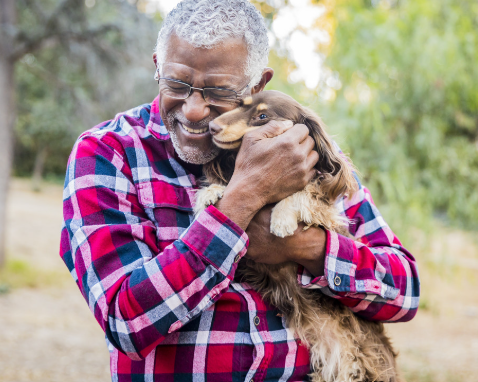
What I would say is: adopt a younger person that you can build a friendship with. Adopt an animal, something that gets you out. Just don’t be alone. Just don’t be alone. You know, our mental health suffers as we age anyway. We have grief, we have trauma that comes back, all kinds of things, right?
When you’re in the part of your life when you’re in a career, raising a family, or whatever, you just don’t have time to focus on all of that grief and trauma – or you’re creating more trauma while you’re in your life. Once you sit, once you get a little bit older, and you think that about you, that can be overwhelming. Just try to keep yourself from getting lonely. Even if it’s just calling somebody on the phone. That’s my wisdom.
*Nate Paul is a convicted felon, and a real estate developer. His crimes led to the impeachment and suspension of Texas Attorney General Ken Paxton.