
September is Suicide Prevention Month. AWD has tried to make this month’s difficult and complex topic accessible and resourceful by speaking with a variety of health care professionals.
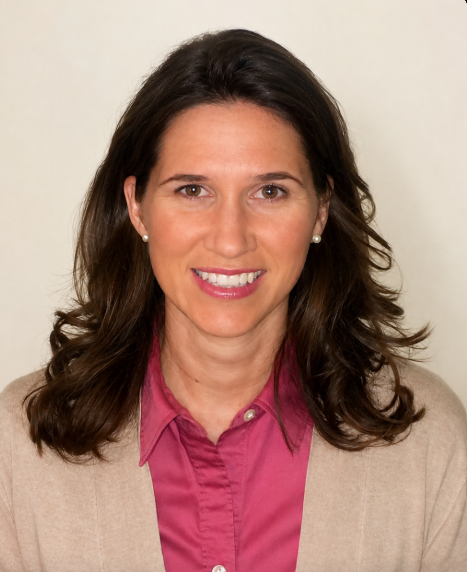
Dr. Anne Johnson is an outpatient geriatric psychiatrist at Duke. She completed medical school, general psychiatry residency training, and an additional year of fellowship training to specialize in caring for older adults and their mental health. She supports patients in managing different conditions like late life depression, anxiety, psychosis, and neurocognitive disorders.
She spoke with AWD about her experience with older adults.
How are you?
I’m doing well. I’m actually at home today. Wednesday, I do all video visits at home.
Oh, lovely.
I’ve been on video visits all morning, but I’m doing well overall.
Do I call you Dr. Johnson?
You can call me Anne.
Okay. Thank you. Thank you, Anne.
Can you tell me about your work, specifically what it is you do and how you got there?
I see patients in a clinic setting and develop a relationship over time and manage different conditions like late life depression, anxiety, psychosis, a lot of neurocognitive disorders. I often collaborate with other medical providers, being at Duke, and psychotherapists, and then sometimes in more challenging or severe illness with some of our interventional psychiatrists who do things like ECT or TMS (Electroconvulsive Therapy and Transcranial Magnetic Stimulation.)
Wow. What was it about geriatric work that interested you?
I went into medical school wanting to work with older adults and I didn’t exactly know what that would look like. I had some time between college and medical school actually working at a local senior center and got to see a lot of older adults and see relationships between spouses, relationships between caregivers and older adults and I just really enjoyed that.
Then I went to medical school thinking, “Okay, I want to work with older adults, but I don’t really know what I want to do with them.” I did a few different rotations and figured out that in psychiatry, I’m able to have a relationship with the person, with family members, and I just really love hearing stories and connecting with them over time. I think that’s what got me to geriatric psychiatry.
It’s a really interesting field. I am obviously quite drawn to work involving older adults, too!
Yeah, that’s very cool.
Can you talk about how older adults are different from other people, younger people?
Sure. Since we’re talking about risk factors and things for suicide, I would say much like the general adult population, a key risk factor for suicide in older adults is depression.
But in older adults, there’s a lot of other driving forces. Some of the things we think about that are more specific to older adults are:
- Decline in physical health,
- Chronic pain is a major risk factor,
- Functional decline,
- Loss of independence,
- Sensory, vision, hearing impairment, cognitive impairments,
- Social isolation. A lot of older adults are living alone or maybe grieving a spouse.
So strong social support can be really, really protective here. Looping back to depression, since we know that’s a major risk factor for suicide in the general adult population, as well as older adults.
I think that depression, especially in older adults is underdiagnosed and definitely inadequately treated.
Why is that? Why does that go underdiagnosed?
I think it’s really important for us to recognize that depression is not a normal thing that happens in aging.
And sometimes I think people just think
- This is what happens as we get older. We’re losing all these things. We’re losing the ability to be independent.
- We’re losing our vision. We’re losing our memory. Why wouldn’t you be depressed? But it’s not a normal consequence of aging.
And there’s many, many older adults who do not get depressed. Actually the rates of depression are lower in older adults. But I think we are missing a lot of people who are depressed.

I think prevention, being able to identify those folks, detecting when depression is happening and being able to manage it. Most mental health treatment for older adults is done in the primary care setting, long before they see me in the office. That’s where these people are usually getting their first antidepressant trial or their first engagement with therapy.
We diagnose depression the same way as we do in younger adults. There’s criteria that we have to diagnose depression. That’s a depressed mood, anhedonia–or the inability to feel joy and pleasure from activities you previously enjoyed.
You have to have one of those depressive symptoms or anhedonia. Then it’s a certain number of the following, like weight changes, sleep changes, energy, fatigue, feelings of worthlessness and suicidal ideation. Depression in older adults can look really different from depression in the general adult population.
So actually the low mood that a lot of people think about, like feeling low, feeling depressed, feeling blue – that’s often less prominent in older adults than in younger adults. Actually, a lot of times it’s more anxiety and irritability.
Because there’s a lot of grieving and there’s a lot of change…
Yeah. There’s a lot of what we would call somatic symptoms.
Body stuff.
Yeah. And vegetative symptoms. So changes with sleep, a lot of early morning awakenings, a lot of changes with appetite; weight loss is a big thing we see in older adults, and fatigue. These are things that people go to primary care doctors for. Blood work.
Right. I was wondering if there’s a distinction between fatigue and being tired.
Yeah. I think those can be interchangeable in some ways. Fatigue, we talk about like a loss of energy. The person themself might not recognize this as depression or a symptom of depression.
So they go to primary care, they get worked up, right? They get all the blood work done, they get a physical exam, nothing’s really found. The next step might be to screen the person for depression symptoms at that point or consider that as the diagnosis that explains these symptoms. It’s kind of like depression, sometimes it’s just not diagnosed, right? Sometimes a person presents with these symptoms and it doesn’t really sound like a typical depression, so it doesn’t get diagnosed.
Then if it is diagnosed, the management can be more difficult because usually our older adults have more medical conditions that might complicate medications being used. They might be more sensitive to medications, they might have a kidney impairment. A lot of different reasons that we have to be really thoughtful about with the medications that are prescribed.
Right. Medications you can’t take with other medications, et cetera.
Right. Like med interactions, or you might have to dose a medicine differently because of a kidney dysfunction and, or the person has cardiac disease. You have to be cautious about certain medications. Then of course, later in life, there’s brain changes that tend to happen.
Which are also not, not a given, right?
Not a given, not a given. Right. It’s not a given that you’re going to develop a neurocognitive disorder or dementia later in life, but many people do.
What happens is the brain networks are disrupted, and then the ability to treat the depression can become more difficult. There are a lot of reasons why we might not be diagnosing these people, we might be missing people with the diagnosis.
Even if we do diagnose them, it can be challenging to treat them.
Yes, they don’t always respond as well to medications.
Right, right.
There are a lot of reasons why it can be more challenging to identify and treat depression in older adults, as you say. One of the things that Aging Well Durham is particularly interested in is social participation. The Comprehensive Aging Plan recognizes that the impact of isolation is huge. Social support is a cross-cutting issue in the Plan.
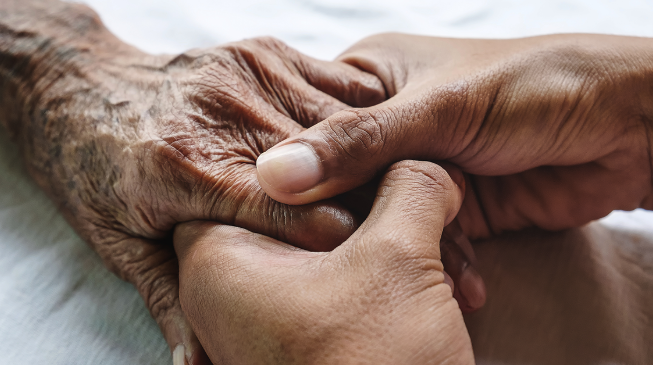
Do you have anything you can tell us about community or social isolation?
Yeah, definitely. I would say that loneliness is a big contributing factor for depression, for suicide. People are living alone, people have lost a spouse, people are isolated because of their physical impairments.
We know that strong social support, whatever that means for that person, whether it’s someone they live with, or friends they gather for lunch with, or a family member they talked to on the phone, whatever it is, that’s going to definitely be a protective factor.
I wholeheartedly agree that social engagement is critical, not only for depression, but for just preserving brain health as we all get older and preventing dementia. Social engagement is just so key for that.
My mother had dementia, but before we acknowledged that was having cognitive challenges, she was depressed. And then it morphed into something else. But one of the first symptoms for her that she had cognitive decline at all or whatever you want to call it was depression.
Yeah, so depression is often one of the presenting symptoms for someone who has dementia. You try your best to treat the depression, and you might get that better.
But then you still recognize there are cognitive deficits. So that’s when you start talking about more of a diagnosis of dementia.
So what do you do? Or can you recommend if a friend or family confides in me that perhaps somebody is feeling suicidal, what steps can I take?
I would say the first thing is listen and continue to be present with that person, right? Continue to be their friend, their supportive family member with what they’re trusting you with.
Then gently encourage them to get some help, supporting them during this process. Depending on how acute or serious it is, that might mean, “Why don’t we find a doctor and talk about this more?” Obviously, if it’s something that’s more alarming and acute, like they’re talking about not wanting to be alive, talking about wanting to die, wanting to kill themselves, you’re going to want to get them to an emergency room, you’re going to want to help them with that.
It depends on where they are with that.
It is more of a passive suicidality.
Can you talk about that? What does passive suicidality mean?
Yeah, yeah. We usually think about suicidal ideation existing on a continuum.
People talk about passive suicidality. This is like the wish to be dead. Someone might say, “You know, things would be better off if I just wasn’t here.” “If I didn’t wake up tomorrow morning, it would be okay.” So that’s more of a passive suicidal wish. That is different from an active thought with a specific plan.
“I’m going to use my gun to kill myself.” would be an active suicidal thought. You’re going to need that person to get to urgent care, that person needs safety, right? Keep that person safe in that moment.
The passive suicidality, obviously that’s very concerning to hear. But that is more where you want to stay by that person, support that person and get them to care. Right?
Yeah. I’m a layman, but it seems to me if somebody is letting you know that they feel this way, then part of them wants help.
Oh, yes. Yeah. Yeah.
I think, again, staying with them, staying present, staying supportive, you know, we don’t want to abandon people in those moments when they’re trying to reach out for help.
Absolutely not.
Can you talk about the distinction between masculine people and feminine people in terms of suicidality and older adults?
We definitely know as a whole, in most, if not all countries that men die by suicide more than women. And that disparity actually widens with age. There is this concept of what’s called a gender paradox in suicide.
That essentially means that women have higher rates of suicidal thoughts and attempts, but men are dying more often. Men are succeeding more often with killing themselves.
Is that a firearm related?
Yeah, I think that’s a big part of it.
It’s definitely the means with which the person makes the attempt. I think we’ve seen that men have more access to lethal means, usually firearms, but even things like hanging or suffocation men are more likely to do. Women are more likely to overdose on medications, which may or may not succeed with killing themselves and often ends up with an ICU hospitalization as opposed to killing themselves.
It’s the access to more lethal means for men, I think that probably contributes. And then just this overall thought in mental health that men are more likely to have undiagnosed depression.
They’re generally not help-seeking. There might be depression that’s more likely to be undertreated in men.
Is that cultural you think, or is it?
That’s a good question. I don’t know exactly that. I think it’s more universal, but I’m not sure exactly. I know that’s definitely true here.
I would have to look into that a little bit more and see how universal that is. I think about women being able to be more social and have some of those protective factors that men just might not pursue.
Substance use is usually higher in men, which I know that substance use can lower the threshold for acting on some of the suicidal thoughts. Then there is this thought about cultural beliefs around suicide and that being a masculine thing to do, which is hard to even get around. But I think there is a little bit of that, that there’s some cultural beliefs there and we need to do a better job of telling men that seeking help and going to a doctor with their problems is more masculine.
We have a lot of work to do around gender in this country. I’ll just put that out there.
Oh yes. So yeah, I think kind of reframing what masculinity is in this topic too.
So men can access healthcare.
Yeah. So trying to figure out where is the comfortable place for a man to seek out support if he’s struggling. I think that’s another reason that primary care tends to be the place where people go because if they’re seeing any doctor at all, hopefully they’re seeing their primary care doctor.
And I can say men are going to be less likely to present to a mental health provider.
Right. It makes me wonder about faith-based communities. That’s a place where men can express themselves and get help. A place that they might feel like a safer place to be in. Sometimes they have men’s meetings and…
Yeah. I think those are all really good ideas about how to get this more into the community and to solve the issue of people who have depression, who it’s going unnoticed, undiagnosed.
Is there anything, is there a means of prevention that we haven’t mentioned beyond, identification, listening, getting help? Is your expertise based more on medical intervention?
Yeah. As a psychiatrist, my specialty is going to be medication. I think that obviously the acute management, what we talked about before, just keeping someone safe, right? Their minimum, that would mean emergency room visits, psychiatric hospitalization, for example, stabilization.
But I think prevention really is going to stand with getting people evaluated for depression and getting it diagnosed and then getting it treated appropriately. Again, the primary care providers are the folks who are probably most capable of doing the most effective intervention. And that’s not necessarily the doctor in the primary care office, but the primary care office and what support that they can provide.
There’s a lot of evidence to say that these collaborative care models within primary care are the best supported intervention. So we have to make sure the primary care providers, or again, some staff in that office are in a good place to screen for depression and then be able to support the patients. After you get a positive screen, you have someone answer all these questions, you get a positive screen, what do you do after that? You have a thorough evaluation, right? We have to have the resources to do a more thorough evaluation and then kind of triage folks, what support are you going to be able to provide them at this point?
And Duke is very good about that, in my experience.
Yeah. So I think hopefully you’re going to talk with some of the primary care folks who are just behavioral health embedded within primary care, because that is where, you know, I would love for you to hear more about the specific things that are being done in our primary care clinics.
I would say by the time someone has gotten a referral to see me, I’m rarely screening for depression at that point, right?
Right.
It’s more that I’m looking at medications and saying, you’ve had a trial of X, Y, and Z, what do we need to try next? Maybe their depression is treatment resistant in some way. It would be rare for me to see a patient– I have done that before, but it would be rare for me to be the first one to diagnose depression in a patient. A lot of times patients come to me where the primary care is saying, is this depression or dementia and help parse this out.
That’s something I do often, but the primary care office is where we can probably do the bulk of interventions. And then thinking about all of the places in the community where we can make people more comfortable with sharing how they’re feeling and getting help if needed.
There’s that component of medication, which can be so crucial. And it sounds like it’s also complicated by age and then helping that person get into the community if they’re not already.
Yeah. And I guess one of the main things I probably left out there, which seems really basic, but like asking about suicidality, a lot of times we might overlook that, or it feels awkward to ask, but we need to be, we definitely need to be asking about it. And then on top of that, just reducing access to lethal means.
When someone discloses to you depression, these suicidal thoughts, we need to have a good idea. What do they have access to at home? I think there’s different ways that our primary care offices are doing that. We know that men use firearms: what does the family think about them having access to that? Or would it make sense for them to not have access to that? Again, a cultural barrier, unfortunately.
Yeah. Yeah. Yeah.
I will say in some difficult cases, I’ve got maybe a husband, and wife who is concerned about the husband. For instance, he might not listen to what the wife says. So I get the adult son to talk to him. You sometimes just have to navigate things like that.
Who does he respect? We have got to do anything, we have to do this to keep him safe. We have to put him in the hospital.
Right.
So when you’re doing that type of safety planning or crisis planning, sometimes you have to get a little creative. I imagine moving game pieces around, family pieces.
Right. Yeah. Yeah.
Well, it’s amazing the work you do. I really appreciate that you took time to talk with me today.
Thank you.
Is there anything you’d like to say or anything else we should know about?
I guess one thing I try to always kind of impart on the trainees that I work with. There are two questions that I always ask as part of a geriatric psychiatry about, there’s many questions, but two, which I really love to ask:
- Who are the people that are important in your life?
- Who are your supports? These are the people that they trust, they confide in.
These are the people who are going to be major protective factors for them. This goes back to that sense of loneliness that puts people at risk. So really trying to get a good sense of who the people in their life are that matter, is crucial.